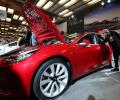
While Elon Musk's political influence continues to grow, his business empire is witnessing headwinds.
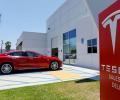
Union Minister Nitin Gadkari on Friday said he has asked US-based Tesla several times to manufacture its iconic electric vehicles in India, while assuring that all support will be provided by the government to the company. Addressing 'India Today Conclave 2021', Gadkari further said electric cars manufactured by Tata Motors are not less good than electric cars manufactured by Tesla. "I have told Tesla that don't sell electric cars in India which your company has manufactured in China.

Between January and August 2025, over 65,000 units of the Bolero were sold, making it the third-highest contributor to Mahindra's overall SUV sales. Bolero annually achieves sales of over 1 lakh units.
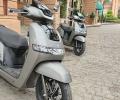
'Price competition is fierce, with many companies selling at zero margin.' 'This pricing pressure is challenging smaller companies and will likely drive some out of the market over time.'

Tata Passenger Electric Mobility (TPEM), a subsidiary of Tata Motors, on Friday announced that it has commenced production at its second factory in Sanand, Gujarat, which it had acquired from Ford India last year. This new facility will unlock an additional manufacturing capacity of 300,000 units per annum, which is scalable to 420,000 units. The new facility is spread over 460 acres and is adjacent to Tata Motors' existing passenger vehicle facility in Sanand.

Auto major Mahindra has ambitious plans for its electric cars project, that include ramping up its output to 60,000 units a year, high-end electric powertrains, and 380 to 650 volt battery systems.

Ola Electric's initial public offering (IPO), of Rs 5,500 crore, is essentially aimed at ensuring the company maintain its top position in the electric two-wheeler segment, with incumbent players TVS and Bajaj Auto giving a fight to the number one player in market share. Most experts and competitors say the amount being raised is in line with the investment required to expand the electric-vehicle (EV) business. There are two discernible trends in the competitive electric two-wheeler market.

'This is not just a cosmetic refresh,' said Suhas Rajkumar, founder and chief executive officer of Simple Energy. 'We have re-engineered the battery integration, made the scooter lighter, improved performance and expanded the portfolio so customers can choose based on real usage needs.'

E-vehicles may face pollution hurdle with hazardous batteries. One lithium-ion battery has a potential to poison the whole water aquifer of Delhi.

With nearly 100 launches and unveils, the Bharat Mobility Global Expo 2025, held in Delhi from January 17 to 22, made one thing clear to automobile enthusiasts: Electric vehicles (EVs) are the way ahead for the Indian auto market for years to come.
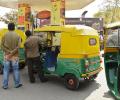
Amid a shift in mobility trends and people increasingly opting for less polluting energy sources, sales of compressed natural gas (CNG) vehicles increased more than 82 per cent in the past five years. A total of 729,902 CNG vehicles were sold in 2022-23 against 400,825 in 2017-18, according to VAHAN Dashboard. Though the increase in sales of CNG-powered vehicles has been significant, their share in overall vehicle sales remains minuscule as is the case with EVs.

The cost of the war is being counted not in the corridors of power in Washington or Tehran, but in Firozabad's darkened furnace rooms, Howrah's idle casting sheds, and a barbershop in Kochi where the wait is suddenly, inexplicably, an hour long, notes Prem Panicker in his must read blog on the Iran War.

For FY26, the company has adopted a cautious outlook, anticipating domestic growth to broadly track the industry's low single-digit estimated growth amid ongoing economic headwinds.
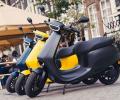
Under regulatory scanner, Bengaluru-based Ola Electric has witnessed an uptick in its sales after facing a decline during the last few months. The company's daily average sales rose to 1,154 units in October, according to Vahan data from the Ministry of Road Transport and Highways (MoRTH). With sales reaching 17,315 units between October 1 and October 15, the company has also boosted its market share to 34 per cent, up from 27 per cent in September, in the electric two-wheeler (e2W) segment.
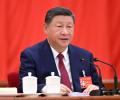
If Xi Jinping is dethroned in the future, the instrument for that may well be embedded within the PLA, notes former foreign secretary Shyam Saran.

India will not tailor its policies to suit US EV maker Tesla, and its laws and tariff rules will be formulated to attract all-electric vehicle manufacturers from across the world to set up a base in the world's fastest-growing economy, Commerce and Industry Minister Piyush Goyal said. Tesla has been seeking an initial tariff concession that would allow it to offset 70 per cent customs duty for cars priced less than $40,000, and 100 per cent for cars of higher value.
Upon completion, the factory will create almost 10,000 jobs and will initially have an annual capacity of 2 million units.

Traversing from being just vehicle manufacturers to mobility solutions providers amid a raging debate over which eco-friendly technology must be incentivised, the Indian automobile industry is driving in the new year under the shadow of a slowdown in sales with the post-pandemic pent-up demand in distant memory. The shift in the auto industry -- where advanced technologies like autonomous driving, vehicle intelligence, connected features and electrification are quickly gaining traction -- will be reflected in the upcoming Bharat Mobility Global Expo in which India's flagship Auto Expo has been clubbed to be held from January 17-22, 2025 in Delhi-NCR.
Tata Motors, the market leader in electric four-wheeler space, has sought incentives for its Tiago EV under the government's production-linked incentive (PLI) scheme, group chief financial officer P B Balaji said on Tuesday. The Mumbai-headquartered firm has applied for all variants of the Tiago, which recently hit a sales milestone of 10,000 units. "The Automotive Research Association of India certification is done.
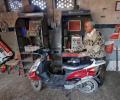
The new scheme may link the incentives to the battery power - higher the power, higher the incentive and most electric two-wheelers running on Indian roads use low power and fast charging batteries.
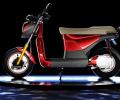
The government has taken a slew of steps to boost the sales of electric two-wheelers and three-wheelers under its Electric Mobility Promotion Scheme (EMPS) 2024, which includes allowing manufacturers to upload claims twice a month and gives them a 120-day window to submit it. The Rs 500-crore scheme -- which had replaced the flagship Faster Adoption and Manufacturing of Electric Vehicles (FAME) scheme-- comes to an end on July 31st.

Tata Motors on Monday said its subsidiary and Ford India have inked a pact with the Gujarat government to acquire FIPL's Sanand vehicle manufacturing plant. Tata Passenger Electric Mobility Ltd (TPEML) -- a subsidiary of Tata Motors -- and Ford India Pvt Ltd (FIPL) have today signed a memorandum of understanding (MOU) with the Gujarat government for the potential acquisition of FIPL's Sanand vehicle manufacturing facility, including land, buildings, vehicle manufacturing plant, machinery and equipment, Tata Motors said in a regulatory filing. The MoU also includes the transfer of all eligible employees of FIPL Sanand's vehicle manufacturing operations, subject to the signing of definitive agreements and receipt of relevant approvals, it added.

The Eicher Pro X is assembled on an all-women assembly line.

Several companies across sectors like finance, healthcare, wellness, retail technology, and asset management are bracing up to hit the D-street. With an unprecedented 1.7 lakh crore raised in 2025, the momentum is likely to sustain in 2026.
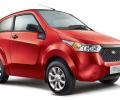
If the drop in sales over the past two years is anything to go by, India's dream of putting seven million electric vehicles on road by the end of this decade has come a cropper.

Electric mobility in India is touted to be the way to the future, but implementation of large-scale projects to bring infrastructure for charging is still lacking.

'There is a need for a national task force with a singular objective to increase automotive exports.'

The GST Council on Wednesday approved two slabs of 5 per cent and 18 per cent effective from September 22, the first day of Navaratri.
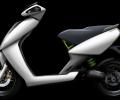
Large manufacturers are investing in small companies to get a peek into their R&D. Alnoor Peermohamed and Anita Babu report.
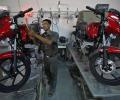
Pune-based two-wheeler major Bajaj Auto posted its highest ever quarterly revenue and profit after tax (PAT) in Q2FY26. Even as consolidated revenues were up 18.8 per cent year-on-year (Y-o-Y) to Rs 15,734.7 crore, PAT zoomed 53.2 per cent to Rs 2,122 crore.

Even as India goes green, lack of uniform standards for setting up charging stations is holding back companies. Alnoor Peermohamed reports.
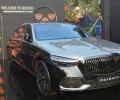
Elon Musk-led Tesla Inc is yet to express interest in India's flagship scheme to attract global investment in electric vehicle (EV) manufacturing, said Union Minister for Heavy Industries H D Kumaraswamy on Monday. In contrast, multiple global automobile giants -- such as Mercedes-Benz, koda Auto Volkswagen, Hyundai Motor, and Kia Motors -- are keen to participate, the minister noted.
Electric two-wheelers have zipped past the half-a-million registration mark and achieved a market penetration of 4 per cent at the fag end of Calendar 2022, according to data released by VAHAN. According to VAHAN data for the year (until December 27), 560,000 two-wheelers were registered in the country, up a staggering fourfold over 2021, when only 136,000 were registered, and when electric vehicle penetration was a mere 1.05 per cent. The total number of two-wheelers (internal combustion engine, or ICE, and electric) registered so far in 2022 stands at 14.5 million, up only 12.7 per cent over the previous calendar year.

Prime Minister Narendra Modi inaugurates the Navi Mumbai International Airport and a portion of the Mumbai Metro Line, marking significant improvements to transportation infrastructure in Mumbai.

'In any aviation emergency, the first rule is aviate -- fly the aircraft.' 'The fact that the commander's voice is not on the recording simply means he was focused entirely on flying. It does not imply anything more than that.'

'We don't have to compete with Maharashtra or Gujarat. We have to now start thinking about how we compete with the United States or China.'
Hero MotoCorp and TVS Motor crossed Rs 1,000 crore in R&D spend for the first time, as legacy OEMs accelerate innovation to compete with new-age EV players.

The proposed exemption in customs duty on import of lithium, cobalt and other rare minerals in the Union Budget 2024-25 is likely to lower the battery production cost and help in making electric vehicles more affordable for the buyers, auto industry leaders said on Tuesday.
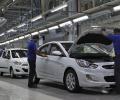
India must act decisively to fully leverage the vast opportunities that exist in India for developing the entire rare earth magnet ecosystem, SIAM president Shailesh Chandra said on Thursday. The government is considering incentives for the production of rare earth minerals and magnets in response to China's restrictions on its global supply, which have disrupted the supply chain.
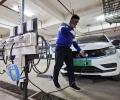
The government on Friday approved an electric-vehicle policy, under which duty concessions will be given to companies setting up manufacturing units in the country with a minimum investment of $500 million, a move aimed at attracting major global players like US-based Tesla. According to an official statement, the companies setting up manufacturing facilities for e-vehicles will be allowed to import a limited number of cars at lower customs duty. The policy seeks to promote India as a manufacturing destination for EVs and attract investment from reputed global EV manufacturers, it added.
